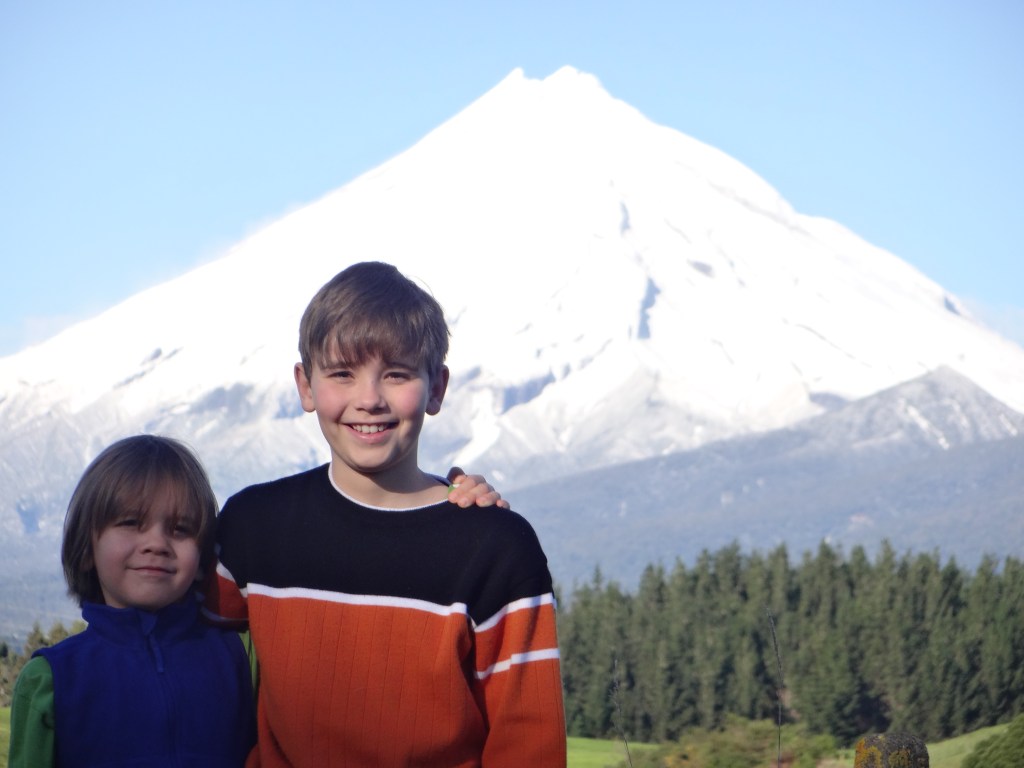
Homesickness and hobbit-fanaticism breathed The Door on the Sea to life. In 2013, I moved with my family for a half year’s stay in the Waikato of Aotearoa also known as Hamilton, New Zealand. I was at the University of Waikato ‘s School of Māori and Indigenous Studies. The Hobbit movie had just come out and all New Zealand was Tolkien-mad. My boys were in 1st and 5th grade and they too were fanatical about The Hobbit, as I too had been fanatical about the novel when I was their age. I admit to being myth-jealous: I wished my boys were as fanatical about Tlingit stories.
My boys were also tearfully homesick those first few weeks in Aotearoa. Tired of Tolkien worship and European mythmaking, tired of nightly tears, I found an hour almost every day to write a half page or so about a young warrior from the Flicker House off to battle the infamous Kóoshdakáa of Tlingit myth, the very same shapeshifters my grandmother scared me with as a child. I wanted to entertain my boys and frighten away their homesickness and learn them a little of their Tlingit heritage, and also dream up new Tlingit myths and stories.
Nearly every night as my boys lay in bed, I read them what I had written that day and asked for feedback. What should happen next? Where do we go from here? It worked: my boys were enthralled in the narrative and couldn’t wait to for our nightly readings. They wanted to be characters in the story: my oldest son wanted to be an armored wolf, my youngest wanted to be a middle-aged warrior. My oldest even created a large map of the narrative’s world on pieces of construction paper taped together (I’ve included a picture of that original map under the “map” tab of this website).
After each reading, they were full of suggestions about where the narrative should go. I took notes of their suggestions and have incorporated many of their ideas into this novel: an island of dangerous bears; human-bear-cousins who protect black bears when they hibernate; and, a pub named after one of their stuffed animals, to name just a few of their ideas. Some ideas I didn’t include (shrimp guns, for example—large shrimp that shoot lasers or heat waves when you squeeze them) and some ideas (owl warriors) may find home in later books.
Eventually, my boys found friends in Aotearoa—tēnā koutou, Māori whānau—and got over their homesickness and no longer needed my nightly readings. The novel, 40 or so single-spaced pages, sat unfinished on my computer long after we returned from New Zealand.
Then came Covid-19. Homebound and frightened, I rediscovered the novel, thought it not half bad, and decided to finish it. It was calming to escape the pandemic, if only briefly, and enter the Aaní world. At first, I wondered if I should make the novel as historically accurate as possible, but the thought exhausted me and robbed me of calmness. Why be constrained by attempting authenticity? Whose interpretation of authenticity should I use? Why not use the Tlingit stories I heard growing up as the basis to open a world of new mythmaking and storytelling? Why step into the contested pool of what is and what isn’t authentic Tlingit culture when I could leap into a salmon stream of the fantastic? This novel is what came from that leap. I hope others will leap into the stream with me.
